
Diploma
Paralegal
Launch your career in the legal profession | LSO Accredited
START DATE: October 26, 2026
TRAINING HOURS: 1180 Hours
CAMPUS: North York – 265 Yorkland Blvd

Program Overview
Enter the legal profession with in-depth knowledge of a wide array of subjects. As a paralegal, you will have the opportunity to build a solid foundation in legal education, allowing you to lead a successful career in law or branch out further within your preferred areas of the legal system. Our curriculum covers the basic principles of all aspects of the law that a paralegal can practice, including employment law, small claims, criminal law and summary offences, provincial and motor vehicle offences, and more! Becoming a paralegal creates opportunities to connect with important and influential legal professionals. Students will also enter the workforce at an accelerated pace, providing a faster path to practical experience in the legal profession.
Quick Facts
Location: North York — 265 Yorkland Blvd
Credential: Diploma
Duration: 55 Weeks (1180 hours)
Courses
Essential theory + practical skills for day-one readiness in the legal profession.
Intro to Law
60 Hours
This course introduces the Canadian legal system, including its constitutional framework, Charter rights, court structure, and litigation process. Students will explore key roles in the justice system, categories of law, alternative dispute resolution methods, and the use of tribunals. The course also covers basic principles of property, business, and consumer protection law.
Computer Applications
40 Hours
This course introduces students to Microsoft Word, Excel, Outlook, and PowerPoint through practical law office documents and simulations. Students will also create a legal-themed presentation to develop real-world communication and presentation skills.
Communications & Writing
40 Hours
This course develops legal writing skills through drafting professional letters, memorandums, correspondence, and pleadings. Students learn the importance of clear communication, proper terminology, and professional presentation techniques in the legal field.
Legal Research
40 Hours
This course provides an overview of legal research, covering statutory law, case law, and common law using online resources such as LexisNexis, Quicklaw, CanLII, and E-Laws.
Criminal & Summary Offences
60 Hours
This course introduces legal issues and procedures for summary convictions and provincial offences, with emphasis on the Criminal Code and Ontario Court of Justice rules. Students examine the court agent's role in provincial offences and summary criminal matters.
Torts and Contracts
80 Hours
This course covers Canadian contract and tort law. Students study intentional and unintentional torts, contract elements, legal remedies, and research techniques applicable to both practice areas.
Administrative Law
40 Hours
This course covers administrative law, including key legislation, tribunal procedures, appeals, judicial review, and the relationship between administrative tribunals, government, and the courts.
Provincial & Motor Vehicle
80 Hours
This course introduces the defence of clients under the Highway Traffic Act and Provincial Offences Act, covering case preparation, hearings, trials, sentencing, motions, appeals, and a court visit for practical experience.
Landlord and Tenant Law
40 Hours
This course examines landlord and tenant relationships under the Residential Tenancies Act, including tenant and landlord rights, enforcement procedures, and proceedings before the Landlord and Tenant Board.
Employment Law
40 Hours
This course covers Ontario employment law through the study of legislation, case law, and court decisions to understand how workplace legal issues are addressed.
Small Claims Court
60 Hours
This course covers Ontario's Small Claims Court process, from commencing an action through trial, judgment enforcement, and representation of both plaintiffs and defendants under the applicable legislation and court rules.
Tribunal Law
40 Hours
This course examines Ontario administrative tribunals, including applicable legislation, hearing procedures, and advocacy skills. Students also deliver presentations on various tribunals studied throughout the course.
Legal Billing Applications
40 Hours
This course teaches students how to use legal billing software to manage law firm operations, covering client matter procedures, billing functions, and practical software applications.
Practice Management
60 Hours
This course teaches students how to develop a business plan for a legal services practice, including start-up requirements, legal obligations, client management, marketing strategies, and office administration.
Ethics
40 Hours
This course introduces the Law Society of Ontario's standards for professional responsibility, practice management, and record-keeping using the Paralegal Rules of Conduct and related professional guidelines.
Alternative Dispute Resolution
40 Hours
This course explores negotiation, mediation, and arbitration through practical exercises and mock mediations, emphasizing dispute resolution techniques relevant to paralegal practice.
Advocacy
60 Hours
This course provides a comprehensive overview of Ontario courtroom procedures. Students learn trial preparation, case theory development, opening statements, examinations-in-chief, cross-examinations, objections, closing arguments, and participate in a mock trial to develop courtroom advocacy skills.
Evidence
40 Hours
This course introduces the common law rules of evidence, including admissibility, applicable statutes, and case law. Students also learn how to qualify expert witnesses and practice evidence submission through mock scenarios.
Field Placement
40 Hours
This course prepares students for employment by developing job search strategies, including goal setting, résumé writing, interview preparation, and understanding employer expectations. The value of volunteering and practical placements is also explored.
Field Placement / Internship
240 Hours
This 240-hour law office practicum provides students with valuable hands-on experience, allowing them to apply the knowledge and skills acquired throughout the program in a professional legal workplace.
Admission Requirements
Admission Requirements: OSSD or equivalent (international credentials must be verified by authority such as World Educational Services (WES), or, if over 18, a mature student test.
Placement Requirements: Vulnerable sector check
How We Prepare You
By the end of our LSO-accredited Paralegal program, you will be able to:
- Represent clients in Small Claims Court, the Ontario Court of Justice for provincial offences, and various administrative tribunals.
- Provide professional legal advice and advocacy within the authorized scope of practice in Ontario.
- Conduct comprehensive legal research and analyze statutes, regulations, and case law to build effective legal arguments.
- Draft formal legal documents, including pleadings, motions, affidavits, and contracts.
Uphold the Paralegal Rules of Conduct and professional ethics as mandated by the Law - Society of Ontario (LSO).
Maintain collaborative relationships with clients, the judiciary, and opposing counsel. - Demonstrate proficiency in trial advocacy, including evidence rules, examination-in-chief, and cross-examination techniques.
- All graduates will be fully prepared to pursue licensing in Ontario after completing their field placement and meeting LSO requirements. You can find more details on the Law Society of Ontario (LSO) Paralegal Licensing Process here.
Industry Demand
Projected job openings (2024-2033)
18,700
Source: Occupations.esdc.gc.ca
Salary Highlights
Entry-Level Paralegal
HOURLY: $20–$25
ANNUAL: $40,000–$48,750
Projected job openings (2024-2033)
HOURLY: $33–$55
ANNUAL: $64,350–$107,250
Sources: JobBank.gc.ca, Indeed.ca
Contact us today to learn more about starting your paralegal career.
Employment Landscape for Paralegals in Ontario
Ontario’s legal services market is evolving rapidly, with Licensed Paralegals playing a critical role in bridging the "access to justice" gap. As the demand for affordable legal representation grows—particularly within administrative tribunals, Small Claims Court, and provincial offences—the need for LSO-licensed professionals is at an all-time high. The landscape is currently defined by the Law Society of Ontario’s (LSO) regulatory framework, which allows paralegals to provide specialized legal services, making them highly sought after by boutique law firms, corporate legal departments, and government agencies.
Ontario Job Market Snapshot (2025–2030)
- High Demand for Specialized Advocacy: Strong hiring trends across Toronto, Mississauga, Scarborough, Brampton, North York, and the GTA, driven by a backlog in the tribunal system and a push for efficient legal service delivery.
- Diverse Career Paths: Stable full-time opportunities exist in private law firms, community legal clinics, municipal government offices (prosecutions), and independent practice.
Why Employers in Ontario Value Licensed Paralegals
Ontario legal employers prioritize candidates who:
- Are LSO Licensed and Insured: Membership in the Law Society of Ontario and possession of professional liability insurance are mandatory for providing legal services and ensuring public protection.
- Possess Strong Technical Proficiency: Mastery of legal practice management software (such as Clio, PC Law, or DivorceMate) and digital filing systems for Ontario’s various courts and tribunals is essential for modern caseload management.
With a growing demand for affordable legal services and the continuous need for specialized advocates, Licensed Paralegals remain an essential part of Ontario’s legal and justice landscape.
What is the Role of a Paralegal?
Licensed Paralegals provide essential legal services and advocacy to individuals and businesses within a specific scope of practice authorized by the Law Society of Ontario (LSO). Operating in private law firms, community legal clinics, and government offices, they ensure access to justice while representing clients in various courts and administrative tribunals.
Licensed Paralegals perform professional and legal duties such as:
- Legal Representation: Advocating for clients in Small Claims Court, the Ontario Court of Justice for provincial offences, and tribunals like the Landlord and Tenant Board (LTB).
- Legal Research & Drafting: Analyzing case law and statutes to draft pleadings, motions, and affidavits.
- Negotiation & Mediation: Resolving disputes through settlement discussions to avoid protracted litigation.
Key Practice Areas include:
- Small Claims Court: Handling civil disputes for money or property up to $50,000.
- Provincial Offences: Defending charges under the Highway Traffic Act and municipal by-laws.
- Administrative Tribunals: Representing clients regarding human rights, employment standards, and social assistance.
- Summary Conviction Offences: Handling specific criminal matters where the maximum penalty does not exceed six months' imprisonment.
Explore Our Facilities
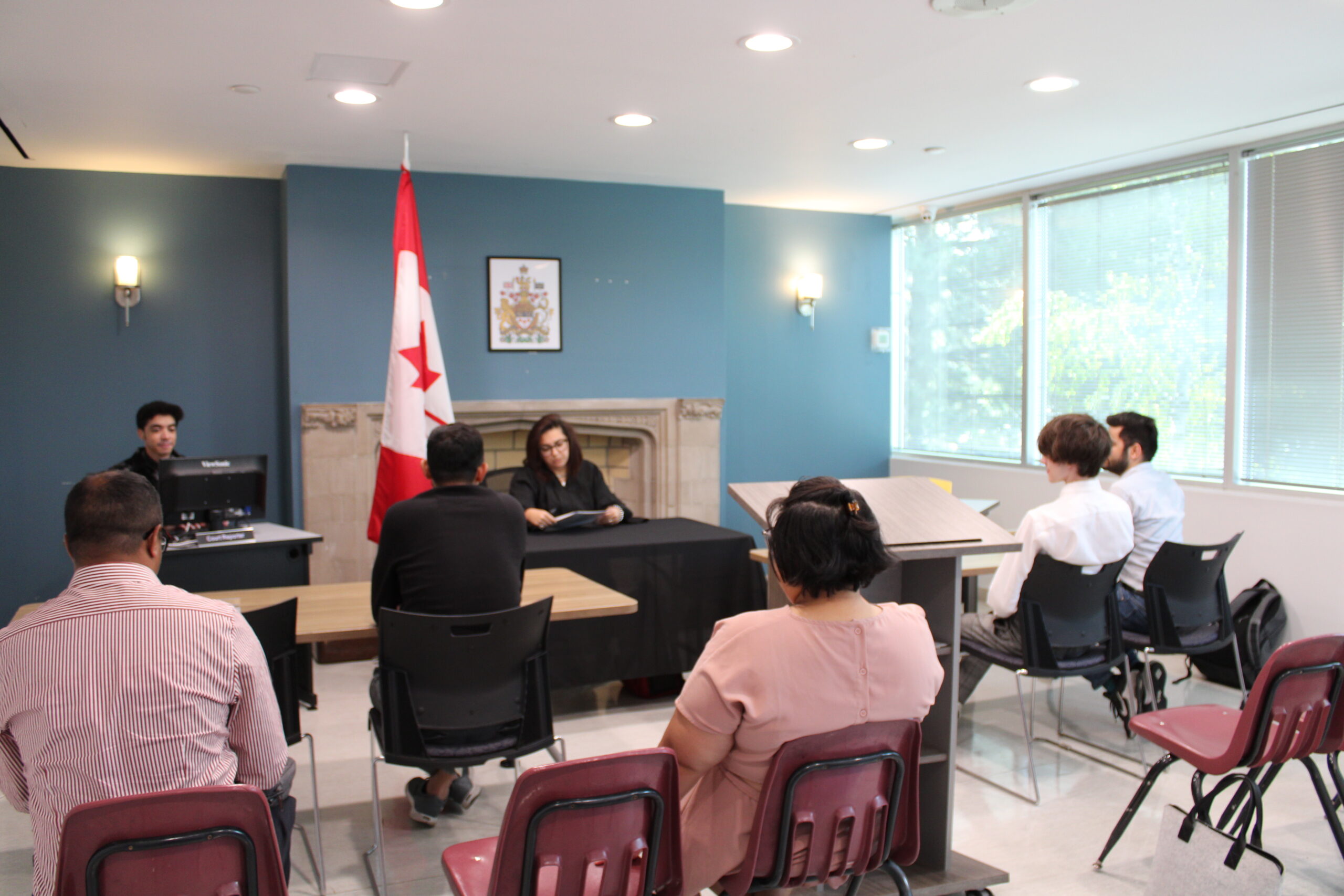
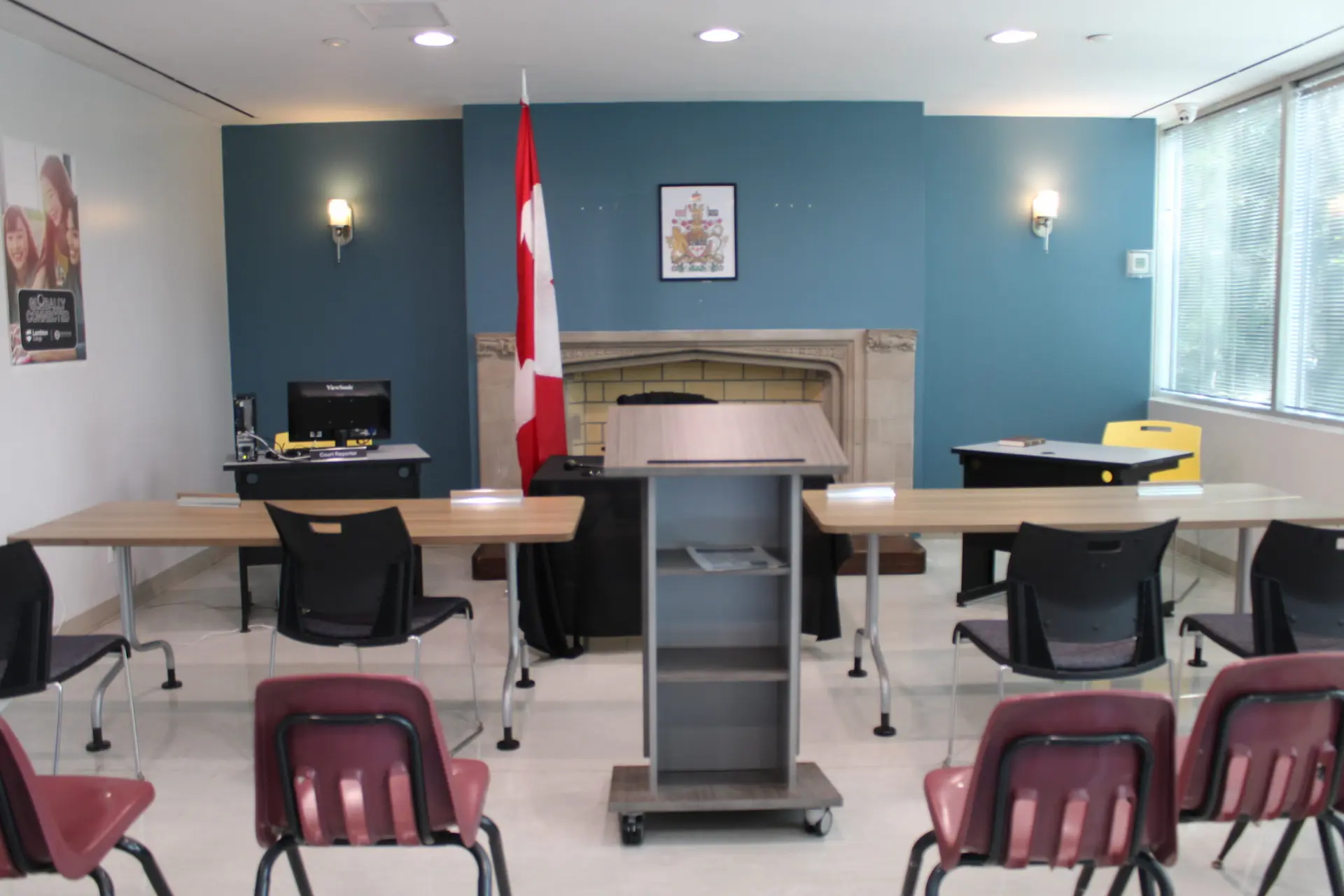
Our campus, located in Toronto, offers an optimal learning space designed to mimic real-world legal environments. Featuring a mock trail room configured like an Ontario courtroom, our facilities provide paralegal students with immersive, hands-on advocacy training that prepares them to meet the demands of the courtroom and represent clients with confidence.
- Dedicated Mock Trial Room for litigation and advocacy practice
- Field Placement Support to meet LSO licensing requirements
What Our Graduates Say
Cestar College has given me a wonderful experience in the Paralegal course I have chosen to pursue as my future career. It has been a great experience at Cestar College. This college has highly knowledgeable instructors, very nice and helpful staff. Special thanks to Mr. Adrian Sharma for all his help and accommodation. I recommend this college to anyone who is looking to establish themselves in the paralegal field.
Alexandre Lakoubov
(Cestar College Graduate)
Is Becoming a Licensed Paralegal Right for You?
If you are seeking a stable, professional career in the legal field and are passionate about advocacy and access to justice, becoming a Paralegal may be the ideal path for you. Our LSO-accredited training program provides the legal knowledge, procedural skills, and hands-on field placement experience required to excel in Ontario’s law firms, corporate legal departments, and administrative tribunals.
Fill out the form on this page to learn more about tuition, schedules, career outcomes, and how you can start your training.
To speak directly with someone from our admissions team, call us at 416-485-8588
Paralegal FAQ
What makes this program different from other paralegal programs?
Unlike traditional routes, the LSO-accredited Cestar Paralegal program provides an accelerated pathway designed to get you into the workforce faster. In just 55 weeks, you’ll complete the full academic curriculum, gain hands-on experience through a professional work placement, and graduate fully eligible for the P1 exam. We’ve streamlined the journey so you can start your career or your own legal practice quickly and confidently! Contact us to learn more.
When is the program offered and what is the schedule?
Student applications are accepted for two intakes: Fall start (September/October) and Spring start (April/May). Schedules vary from term to term; however, we offer both daytime and evening schedules. It’s best to speak with someone on our registration team for information on the schedule planned for upcoming intakes.
Why should I choose Cestar College over other institutions?
Cestar College offers high-quality programs that feature small class sizes, streamlined, condensed schedules and dedicated instructors with extensive experience in their profession. All of our programs include a practical placement for hands-on learning and, because our programs are accelerated, students graduate faster without sacrificing academic depth. Ideal for students looking to enter the workforce sooner, our programs graduate students who are motivated, job-ready, and prepared for success.
Does Cestar college offer financial aid?
All of our programs are OSAP and Better Jobs Ontario eligible. Students are advised to visit the OSAP and Better Jobs Ontario websites to determine whether they qualify for financial assistance through these provincial programs. Additionally, Cestar offers interest-free payment plans. Students are encouraged to speak with someone on our registration team to learn more and determine their eligibility.
Can international students apply to Cestar College?
Currently, Cestar College is accepting applications from Canadian Citizens and Permanent Residents only. To learn more, please contact us here.
What is the student life like at Cestar College?
At Cestar College, students can enjoy a vibrant and engaging student life with access to study rooms, student lounges, an on-campus library, and food services, including Tim Hortons! Our campus provides all the necessary amenities for a rewarding and full student experience, in- and outside the classroom.
Where is Cestar College located?
Our campus is located at 265 Yorkland Blvd., near the intersection of Victoria Park and Sheppard, just north of Hwy 401. Cestar College is both TTC and GO Transit accessible. Student parking is available.
Can I schedule a campus tour?
Of course! Our regular hours are Monday through Friday from 8:30 pm – 5:30 pm for campus tours. Evening tours can also be arranged. Contact us here to book a tour.
What is the eligibility criteria to apply?
Students must have an OSSD/High School diploma or equivalent. Students with mature student status (over age 18) without an OSSD or equivalent are required to write an admissions test.